Understanding Firestopping: The Often Overlooked Protector in Building Safety
Authored by Chris Resig, AIA, LEED AP
When it comes to fire safety, much of the focus tends to be on fire alarm systems, fire protection, and means of egress. Yet, one of the most crucial, and often overlooked, elements of building protection lies in what’s hidden behind walls and ceilings: firestopping systems.
What Is Firestopping and Why Does It Matter?
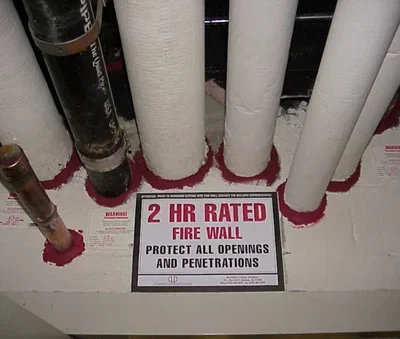
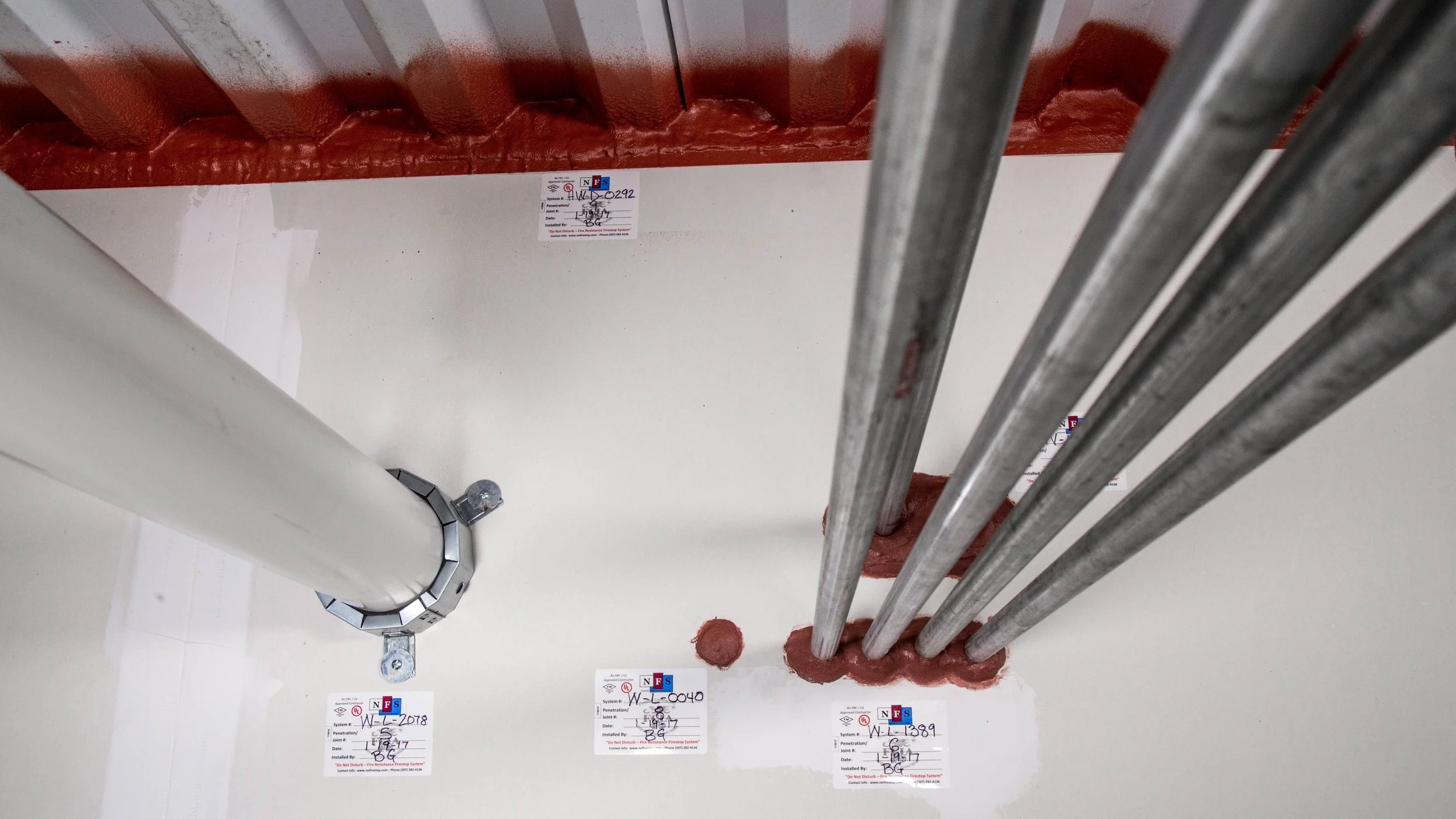
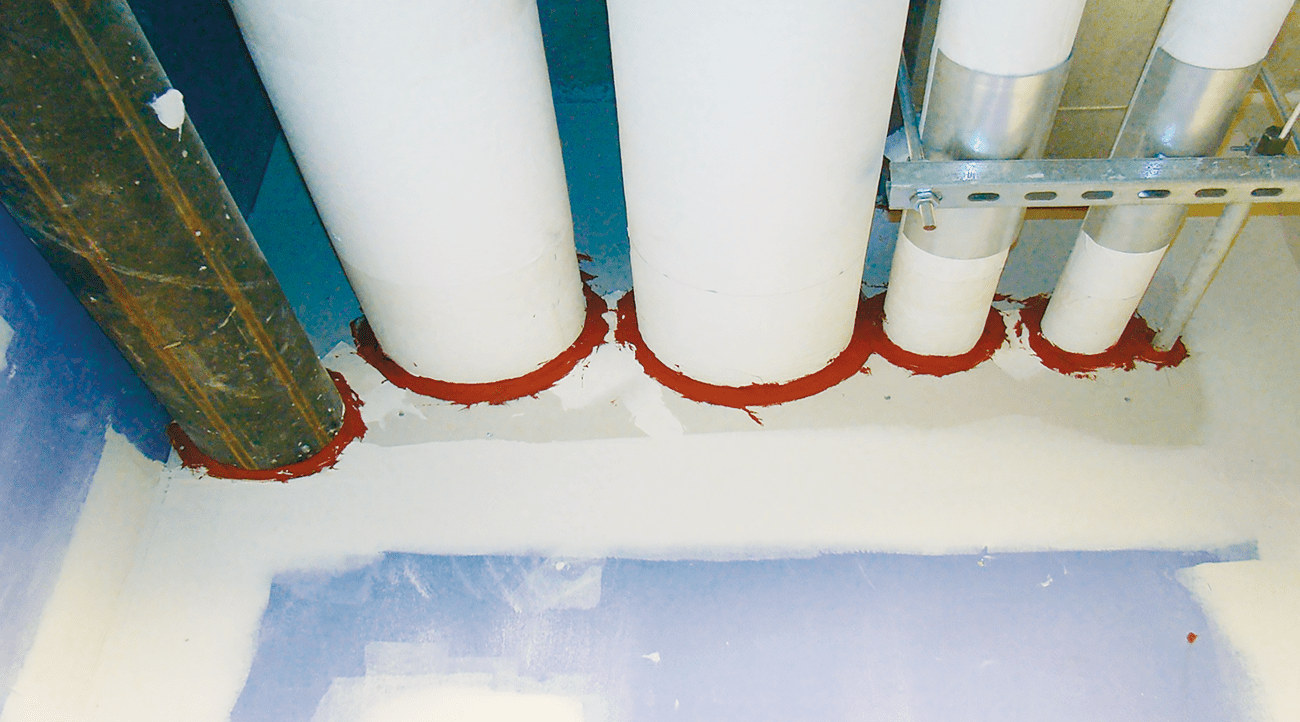
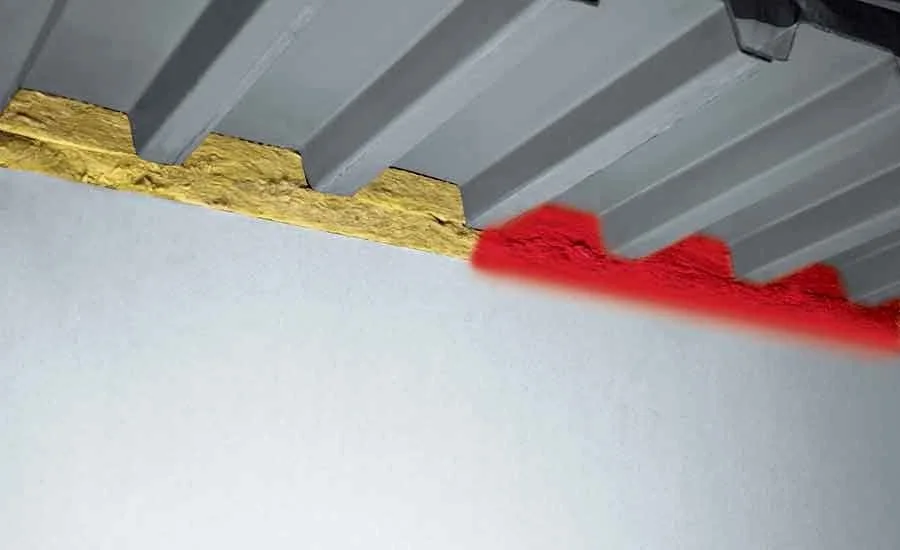
Firestopping refers to the passive fire protection systems designed to seal openings and joints in fire-resistance-rated walls, floors, and ceilings. These assemblies are critical in preventing the spread of smoke, heat, and flames from one space to another during a fire event.
In fact, according to the International Building Code (IBC), Chapter 7 governs the materials and assemblies used to safeguard against fire and smoke spread within and between buildings. The reality is sobering: most fire-related deaths result from smoke inhalation, not burns. Properly installed firestopping can make all the difference. It is literally a matter of life and death.
Fire Resistance vs. Fire Protection: Know the Difference
A common point of confusion in design and construction is the difference between fire-resistance rating and fire-protection rating:
• Fire-Resistance Rating measures how long an assembly can withstand exposure to fire while maintaining its structural integrity, typically expressed in minutes or hours (e.g., 45, 60, or 90 minutes).
• Fire-Protection Rating applies to openings like doors and windows, focusing on how well they limit the spread of smoke and flame, but without restricting heat transfer.
Understanding both helps ensure that each element of a building’s design performs as intended in a fire event.
Breaches and Penetrations: Where Risk Enters into the Equation
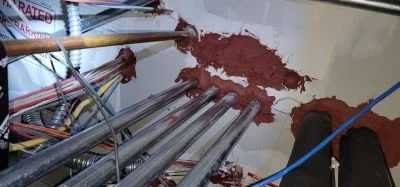
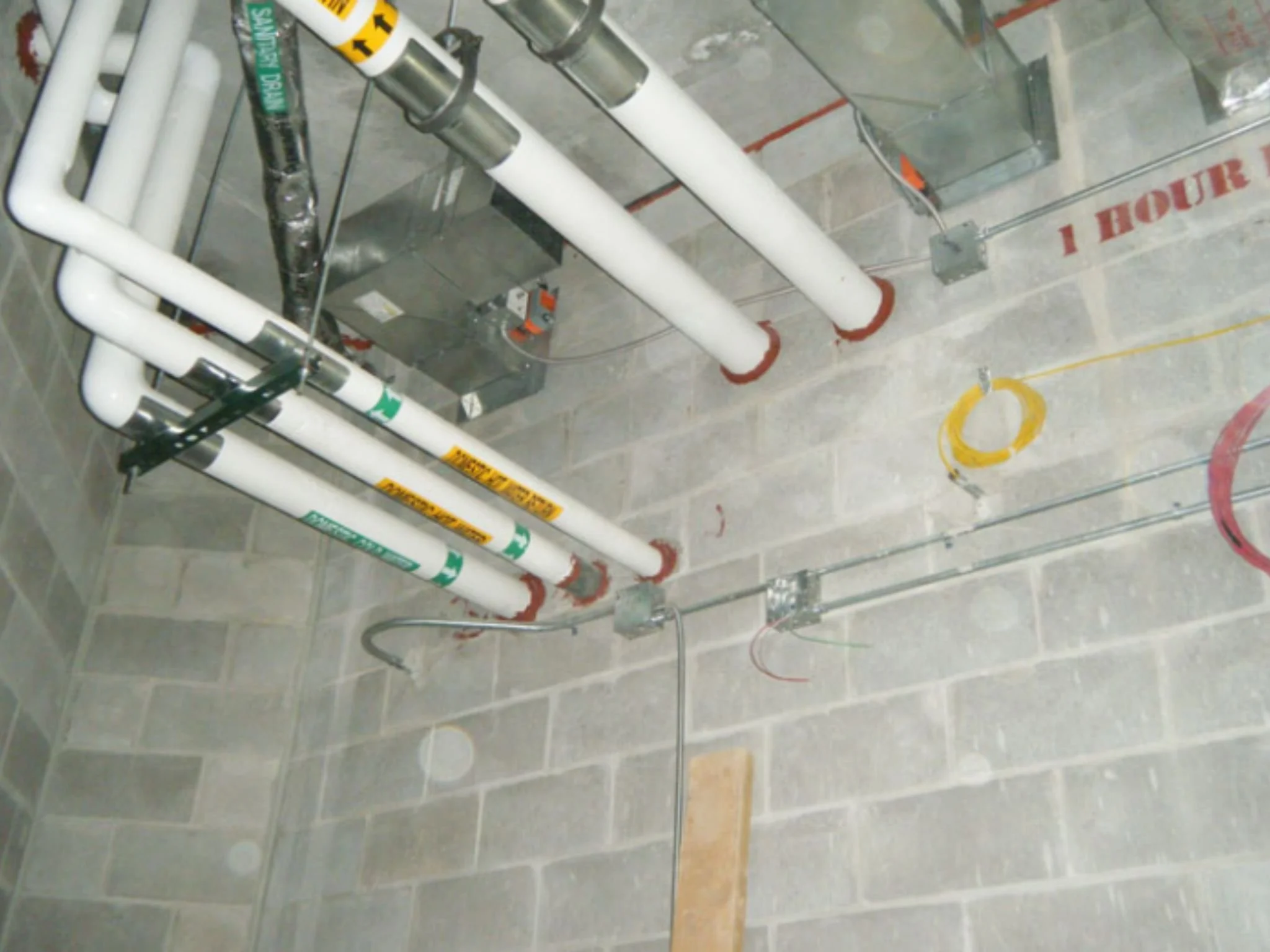
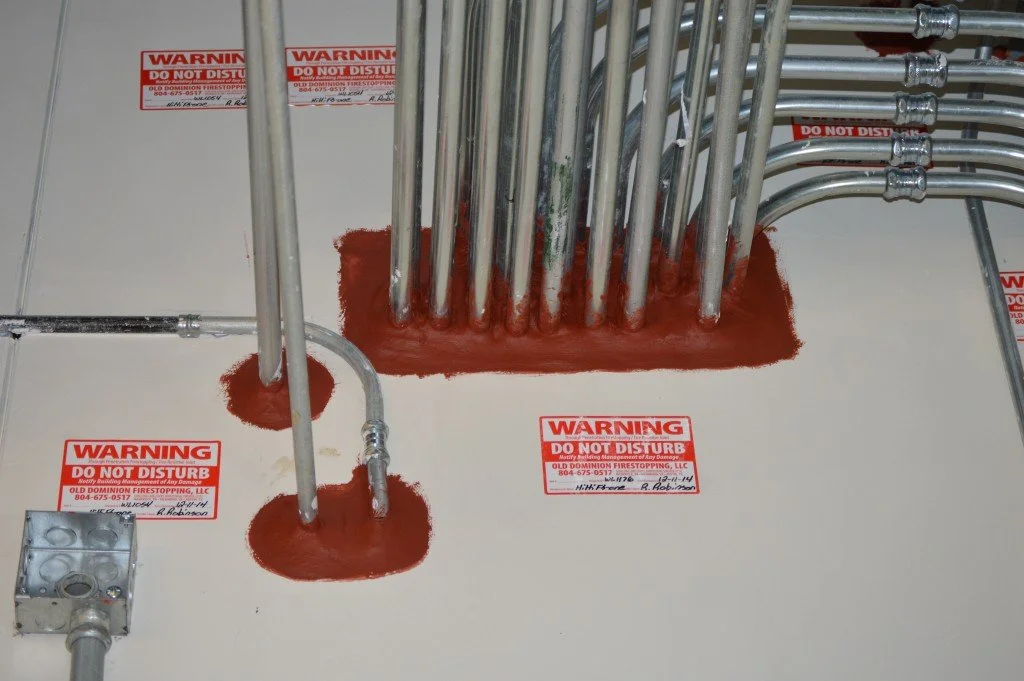
Even the best-rated assemblies lose effectiveness when they’re breached. Penetrations (pipes, conduits, or ductwork) or Joints (floor-to-wall, wall-to-ceiling/deck, or wall-to-wall) can compromise fire-resistance unless properly sealed.
• Through Penetrations pass all the way through a wall or floor.
• Membrane Penetrations only pass through part of an assembly.
Each must be treated using the correct UL-rated firestop system to maintain compliance and performance.
The UL Designation System: A Common Language for Compliance
The UL Fire Resistance Directory provides a standardized system for identifying firestop assemblies. Each UL Design Number (like W-L-1009) tells you what’s being penetrated (wall or floor), the construction type, and the penetrating item, everything you need to specify and verify compliance. Designers, contractors, and building officials rely on this shared system to ensure safety and accountability.
Team Responsibilities: Everyone Plays a Role
Proper firestopping isn’t a one-person job:
• Design Teams identify rated assemblies, coordinate with building systems engineers (MEPFP), and select appropriate UL designs.
• Contractors are responsible for constructing according to those designs, but not for choosing them.
• Building Officials verify compliance during inspection, often relying on documentation like UL details and engineering judgments.
• Building Owners play a significant role in making sure firestopping assemblies are maintained and not compromised over the life of the building. It is not uncommon to have firestopping assemblies become compromised or removed through renovation or maintenance activities.
When existing conditions don’t exactly match a UL assembly, Engineering Judgments (EJs), issued by licensed professionals or testing agencies, can help bridge the gap, subject to approval by the Authority Having Jurisdiction (AHJ).
Testing, Ratings, and Real-World Application
Firestopping products undergo rigorous testing based on standards like ASTM E814 and ASTM E119. Ratings measure:
• F Rating – Time before flame penetration
• T Rating – Time before temperature rise on the unexposed side
• L Rating – Leakage of air and smoke
• W Rating – Water resistance during hose stream testing
Each metric helps ensure that the assembly not only resists fire but also maintains integrity and performance under real-world conditions.
A Layer of Safety that Can’t Afford to be Overlooked
Firestopping is the unsung hero of building safety, a hidden barrier that can save lives, protect assets, and preserve structural integrity. It’s not just about compliance; it’s about responsibility. When properly designed, specified, and installed, firestopping systems serve as one of the primary lines of defense when seconds count most.