Through the Laboratory Lens: Expertise in Planning, Oversight & Peer Review - Part Two
Authored by Glenn Woodbury, AIA, NCARB, LEED AP
Building upon the evolving needs discussed in Part One, today’s research laboratories must be designed to support increasingly complex operations, advanced technologies, and rapidly changing research demands. These high-performance environments require careful consideration of safety, efficiency, flexibility, and regulatory compliance, with every design decision contributing to the overall success of the facility.
Whether expanding existing spaces, renovating aging infrastructure, or developing new facilities, laboratory projects require more than traditional architectural and engineering solutions. They demand specialized knowledge, strategic planning, and a deep understanding of research workflows to create environments that not only meet today’s requirements but are also prepared to adapt to future advancements.
Introducing Part Two of our six-part blog series:
2) Planning & Designing Laboratories for the Future
Research is evolving rapidly, and laboratories that support that research must evolve with it. Whether expanding existing facilities or designing new ones, laboratories need to accommodate emerging technologies, shifting workflows, and long-term operational goals. Forward-thinking laboratory planning is critical to ensuring that investments today continue to deliver value tomorrow.
The Value of Designing for Growth and Flexibility
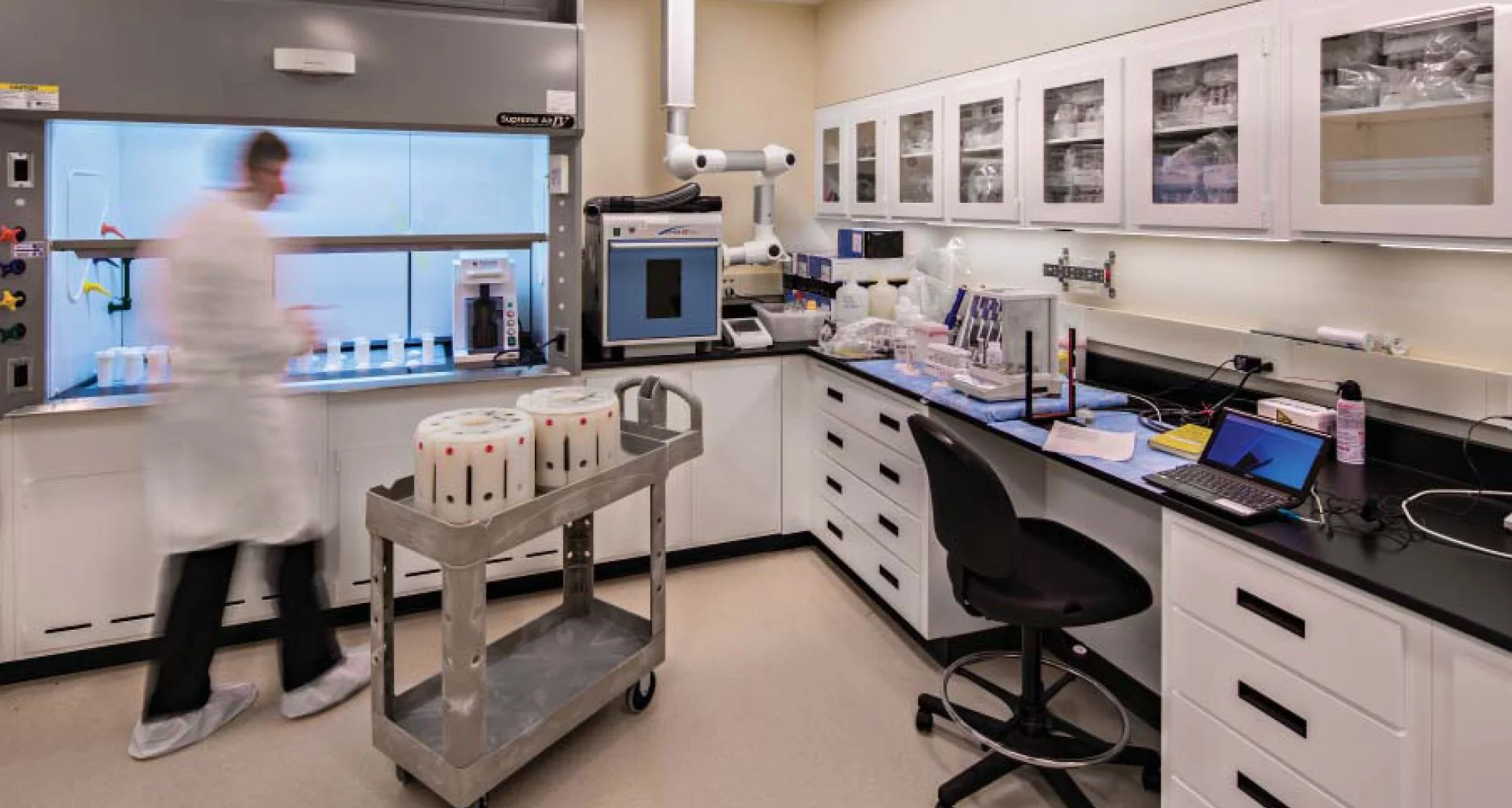
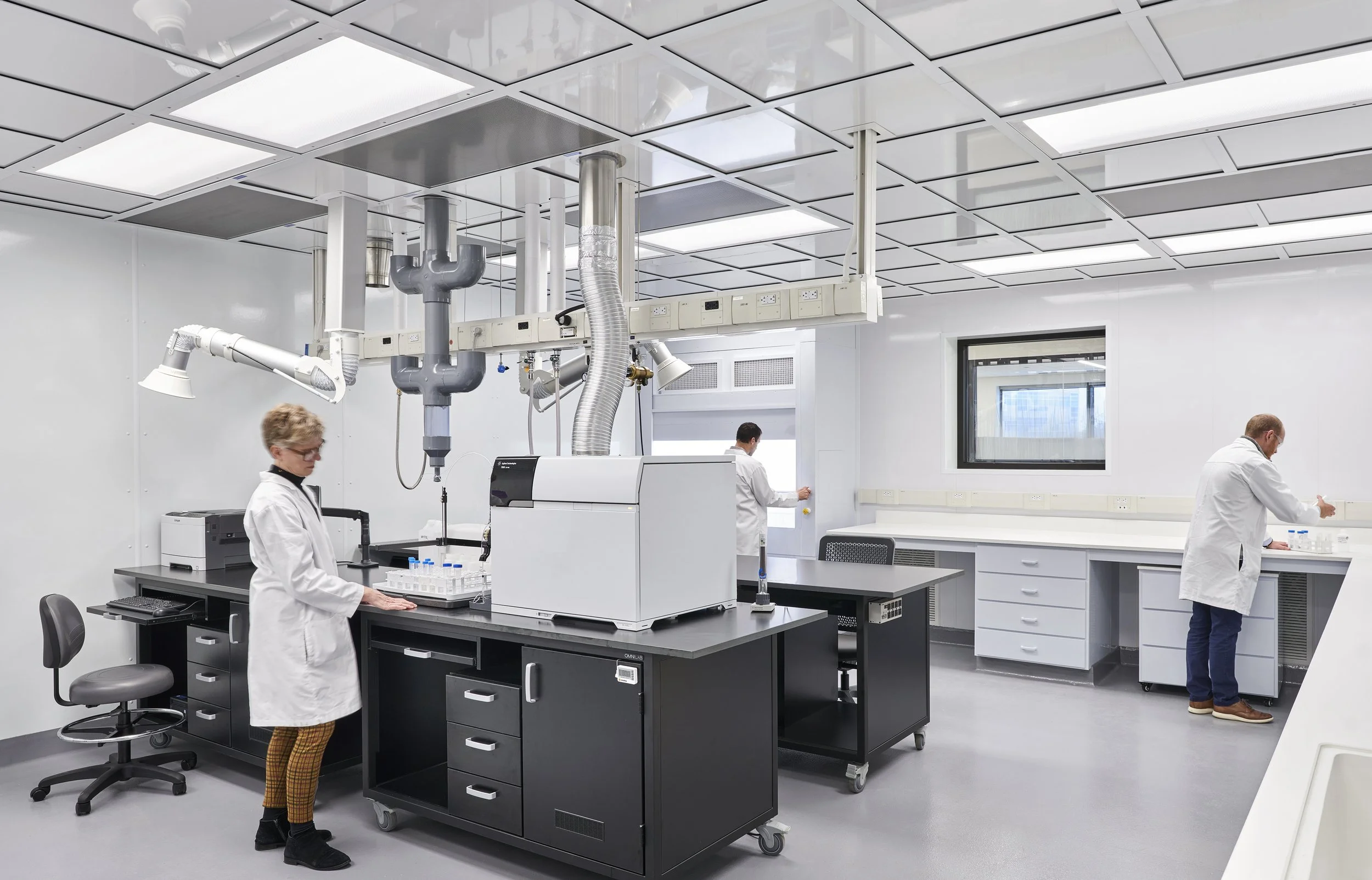
Laboratories must be adaptable. Modular layouts, scalable infrastructure, and flexible workflows allow clients and the researchers/primary investigators to pivot quickly as research priorities adjust. By anticipating future needs, laboratories can avoid costly renovations and downtime.
NKB’s Approach includes:
Modularity and Scalability: Laboratory layouts are planned and designed to accommodate additional equipment, staff, or new research programs without disrupting operations.
Data-Driven Design: Integrating data infrastructure from the start supports advanced research tools and analytics.
Cross-Team Collaboration: Collaboration with team partners to apply a future-focused lens to ensure each project, no matter its size or complexity, is designed for growth, efficiency, safety, and compliance.
Why does a future-focused approach matter? Laboratories are a long-term investment that can often involve significant capital outlay. Therefore, foresight not only maximizes operational efficiency but also ensures regulatory compliance and adaptability to emerging scientific trends. Expert planning and oversight reduce risks, improve outcomes, and safeguard both time and capital.